BBC Sport Online's Matt Slater meets the
corporation's very own running guru, London Marathon ever present Steve
Wehrle.
We have all heard somebody we know,
usually on the morning after the night before, say 'That's it, never
again'.
Well, if anybody hears Steve Wehrle
moaning about his feet or his lungs after the London Marathon on 22
April ignore him, he is an addict - it will take more than a few
blisters to keep him out of next year's race.
Wehrle is one of 38 runners lining up
this year that has been there 20 times before. This group, the
"Ever Present", has come back for more of the same every year
since the first race on 29 March 1981.

Wehrle has clocked up
30,000 miles
|
Why? For Wehrle the answer is simple.
"I love it. I enjoy the training as
much as the day. I am frightened to stop," Wehrle said.
After taking up running in 1978 at the
age of 30, Wehrle has run marathons all over the world and estimates
that he has run about 30,000 miles in total - an equivalent of more than
eight laps of the globe.
Wehrle, as you would expect, is a
treasure cove of knowledge when it comes to the London race. But what is
his number one training tip for a successful day?
"Do the mileage. There are no
short-cuts, I've been looking for 20 years and still haven't found
them," he said.
"It is difficult training through
the winter, but that's why it's much better to train with friends or as
part of group. It is also a good idea to mix your training up."
Wehrle suggests combining short, fast
runs, with long, slow runs, as well as mixtures of the two - interval or
fartlek sessions - to keep your training fresh.

That is the tricky thing about the marathon - it depends so much
on how you're feeling on the day, the weather, what kind of
start you get
|
|
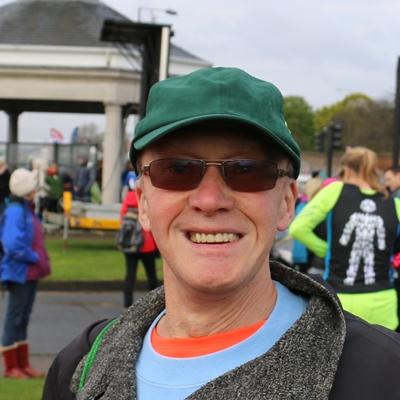
Steve Wehrle
|
"But there really is no substitute for
putting the miles in," he added.
"There is a theory that says you
multiply your average daily training mileage by three to work out the
point that your body will start to really suffer from.
"This, sadly, brought no comfort for
me as it means I will be blowing hard from halfway onwards."
On race day itself Wehrle always tells
his BBC Running Club members to keep it steady at the start.
"The first five or six miles can be
a nightmare. First of all it can take 15 minutes to cross the start
line, and then another half an hour before you find a bit of room to run
in," he said.
"So the instinct is to run too fast
at the start in order to find some space - do this and you are going to
be in trouble later on."
Wehrle is also no stranger to the
phenomenon of 'Death in Docklands' - the infamous flagging feeling that
all London veterans have grappled with around the 19-mile mark.
|
Do not scrimp on training - do the mileage!
Train with friends and mix your sessions up
Take it steady at the start - save some
gas for Docklands!
|
"There is no question what my least
favourite part of the course is - Docklands. I had a terrible time
getting through there a few years back," Wehrle recalled.
"But that is the tricky thing about
the marathon. It depends so much on how you're feeling on the day, the
weather, what kind of start you get."
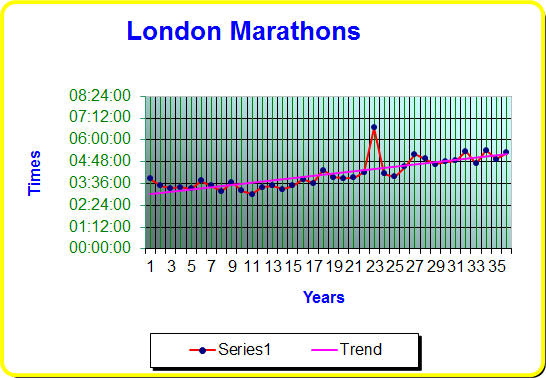
While Wehrle's chances of bettering his
best London time of two hours 59 minutes and 59 seconds - which must
have been some sprint finish - are slim, he is hoping to improve last
year's time of 3:52:51.
"I'll give it a go. The training has
gone well this year, and I'm hoping for 3:45ish," he said.
"But just getting around will be
enough. The powers that be are going to make some kind of presentation
to us at the end to celebrate our 21st marathon."
While Wehrle will be happy to find some
space on his mantelpiece for another plaque or trinket, I am sure the
best prize the organisers could find is free entry to next year's race.